
How to play butifarra
Butifarra (also spelt botifarra) is the most popular card game in Catalonia. It is played with the 48-card Spanish deck by four players in two partnerships, with partners sitting opposite each other.
These are the rules as the Butifarra game explains them in its "How to play", in 10 steps and with the same pictures.
Step 1: Two partnerships
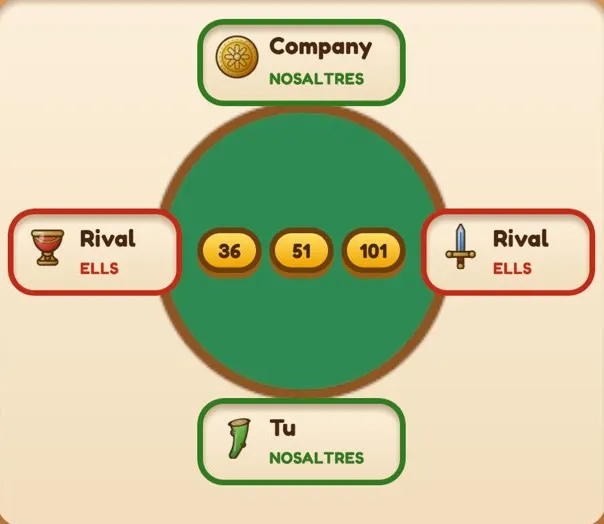
The first partnership to reach the agreed target wins: 36, 51 or 101 points.
You play with the partner opposite you, against the two players on either side. Each player gets 12 cards (the 48-card deck shared between four).
The target for the game is agreed before you start: 36 for a short game, 51 or 101 for a longer one. You play as many hands as it takes for one partnership to get there.
Step 2: The scoring cards
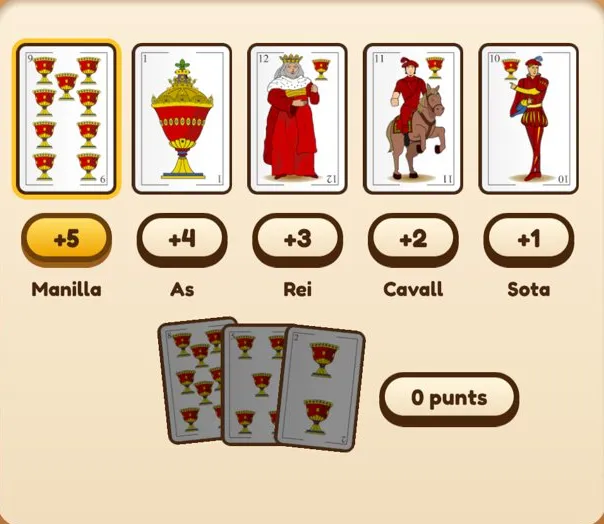
From strongest to weakest: manilla (the 9) = 5, ace = 4, king = 3, knight = 2 and jack = 1. Cards from 8 down to 2 score nothing.
This is what surprises people coming from other games: the strongest card in each suit is the manilla, the 9, above the ace. Then come the king (12), the knight (11) and the jack (10). The cards from 8 to 2 score nothing and, among them, the highest wins.
Each suit adds up to 15 points, and the four suits to 60.
| Card | Number | Points |
|---|---|---|
| Manilla | 9 | 5 |
| Ace | 1 | 4 |
| King | 12 | 3 |
| Knight | 11 | 2 |
| Jack | 10 | 1 |
| 8 to 2 | 8–2 | 0 |
Step 3: Each trick, 1 point
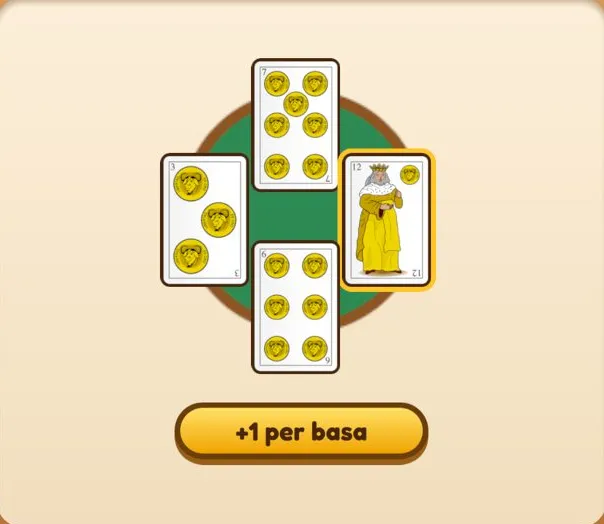
Whoever wins a trick (the 4 cards on the table) gets 1 extra point. Each hand is worth 72 points: 60 from cards and 12 from tricks.
Each player plays one card and the four cards on the table make a trick. The partnership that wins it takes it, and the winner leads the next one. With 12 cards each, every hand has 12 tricks.
At the end of the hand, each partnership counts the points in the cards it has won and adds one point per trick. That is why 36 is the key number: it is half of the 72 points in a hand.
Step 4: The dealer calls
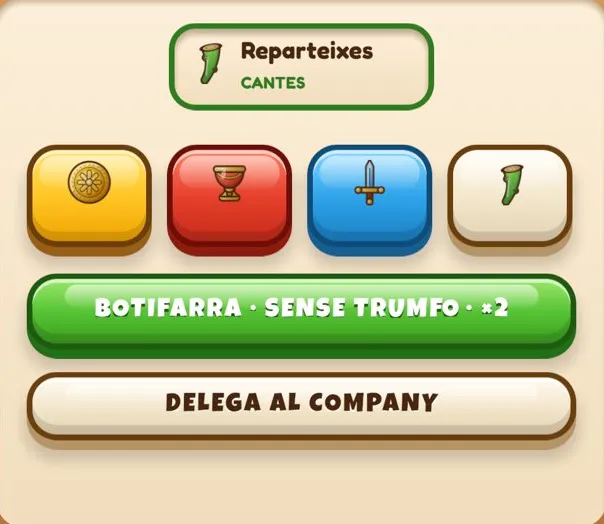
Choose trumps, call butifarra (no trumps: everything counts double) or delegate to your partner. The player to the right of the dealer leads.
Trumps are the suit that rules the hand: any trump beats the cards of the other suits. The dealer looks at their cards and decides: with one strong suit, they name it trumps; with strong cards in many suits, they can call butifarra and the hand is played with no trumps and counts double; if unsure, they delegate and their partner chooses.
In the game, the first dealer is decided by a draw: everyone turns a card and the highest deals.
Step 5: Follow suit
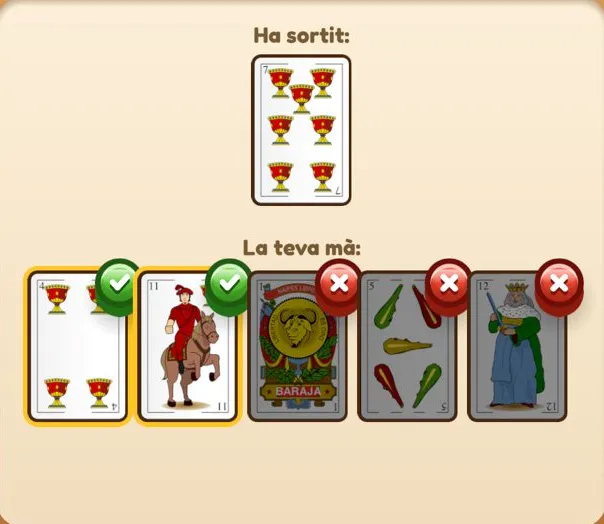
If you have cards of the suit that was led, you must play one.
The suit led is the suit of the first card in the trick. If you have it, you must play it, even if you would rather keep those cards: this is following suit. Only when you have none can you play a card of another suit, and then step 6 comes in.
Step 6: Beat it if you can
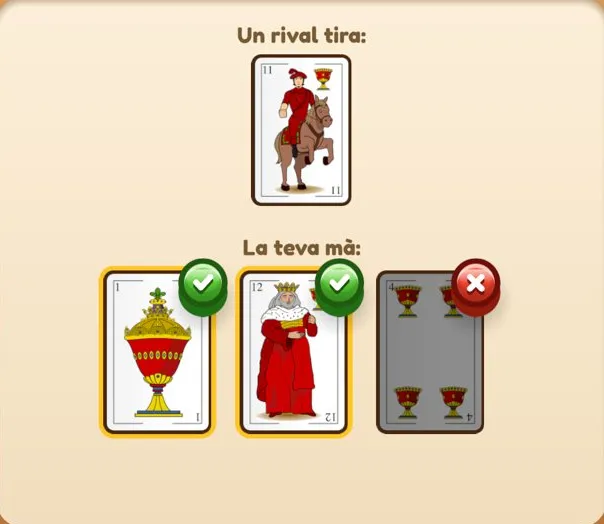
If your partner is not winning, you must play a card that wins. If you have none of the suit, you must ruff with a trump. If your partner is already winning, you do not have to.
This is the rule that makes butifarra different: following suit is not enough. When an opponent is winning the trick, you have to try to win it. If you have a higher card of the suit, you must play it (beat); if you have no cards of the suit, you must play a trump (ruff).
When your partner is already winning the trick, you do not need to beat it. And what if you cannot beat it at all? That depends on the variant: see step 10.
Step 7: Who wins the trick
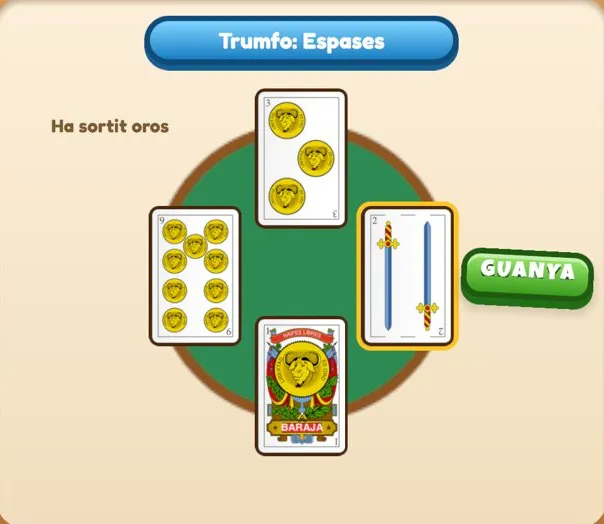
The highest trump; if there is none, the highest card of the suit led.
A card of another suit that is not a trump never wins, even if it is a manilla. In the example, trumps are swords and coins were led: the 2 of swords wins the trick, ahead of the ace of coins.
When butifarra has been called there are no trumps, and the trick always goes to the highest card of the suit led.
Step 8: Contro and recontro
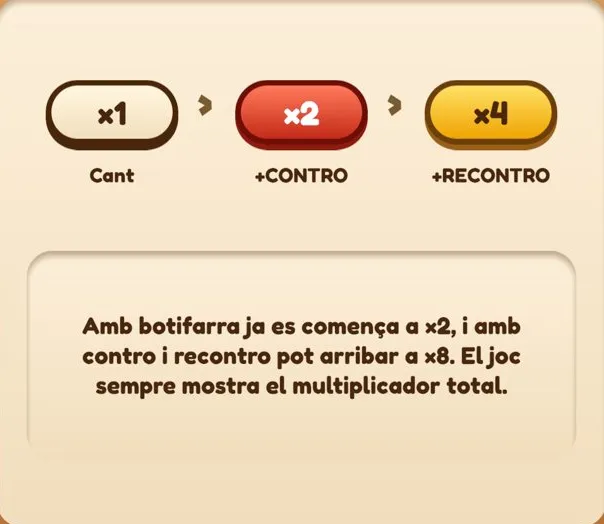
The opponents of whoever called can say contro, and the hand counts double. The caller can answer recontro, and it doubles again. With butifarra it can reach ×8.
The multipliers multiply each other. A trump call is ×1; with contro (double), ×2; with recontro (redouble), ×4. Butifarra already starts at ×2, so with contro it becomes ×4 and with recontro, ×8.
If you win the hand, you score the multiplied points; if you lose it, they do. In the game the total multiplier is always on screen, and a player who does not want to double says "pass".
| Call | No contro | Contro | Recontro |
|---|---|---|---|
| Trumps | ×1 | ×2 | ×4 |
| Butifarra | ×2 | ×4 | ×8 |
Step 9: Scoring
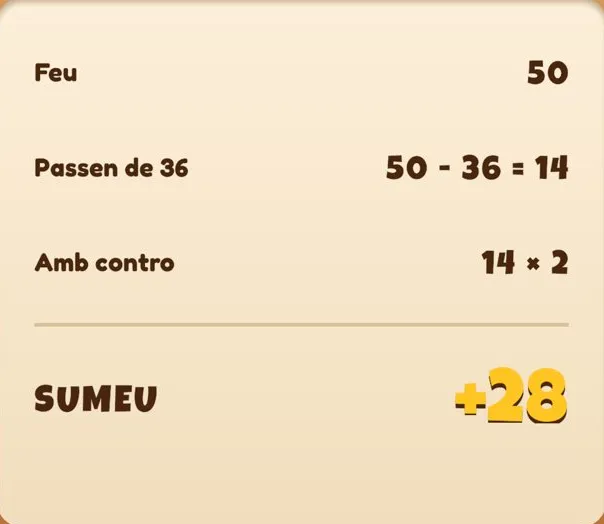
The partnership that goes over 36 scores the excess, multiplied. If it ends 36 to 36, nobody scores.
At the end of the hand, each partnership adds up the points in its cards and its tricks. As there are 72, either one partnership goes over 36 or it is a tie.
Example, the same one as in the game: you make 50 points, 14 over 36 (50 − 36), and there was a contro, so you score 14 × 2 = 28 points. Had it been butifarra with contro, it would be 14 × 4 = 56. Hands add up until one partnership reaches the agreed target (step 1).
Step 10: Obligada or lliure
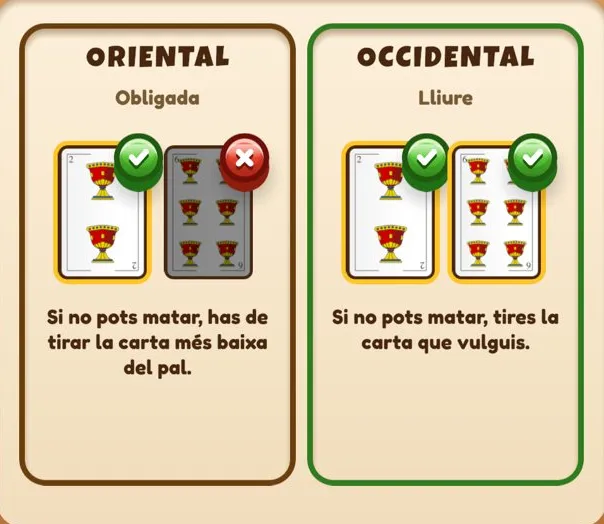
In both you must follow suit and beat the trick. The only difference is what happens when you cannot beat it: in obligada (eastern) you must play your lowest card of the suit; in lliure (western) you play any card you like.
In the game, you choose the variant in the settings. There is an example in obligada or lliure.
Practise at the bar table
You learn by playing. The game has the same "How to play" and a three-level AI that follows every rule: following suit, beating, ruffing and both variants.


Keep going: the obligada and lliure variants, the glossary and the FAQ.